A reroof is the biggest single thing most people ever spend on the outside of their house, and it’s the one they know least about — because you only do it once. This page is written to change that. By the end of it you should know enough to judge whether any roofer’s quote is a good one, including ours.
Roofs don’t have an expiry date stamped on them. They have symptoms. The reliable ones:
The single clearest signal. If storms took slates off one slope, that's damage. If slates are letting go across the whole roof, one at a time, over years, that's nail sickness — the original iron nails have corroded to the point of failure. The slate is often perfectly good. It's just no longer attached. You cannot repair your way out of this: every slate you refix is surrounded by nails that are the same age as the ones that already went.
Push a screwdriver into the sarking board in the loft. If it goes in, the timber is rotten, and where it's rotten it isn't holding a nail. Rot spreads sideways from a long-running leak, well beyond the visibly wet patch.
Two repairs in five years is a roof. Two repairs in one winter is a roof that's telling you something.
From inside the loft, in the dark, with the light off. A pinhole here or there is normal on an old slate roof. Constellations are not.
That's structural — rafters or sarking failing — and it needs looking at soon, not eventually.
This is where most quotes differ, and it’s where you should read carefully — because two quotes for “a new roof” can describe genuinely different pieces of work.
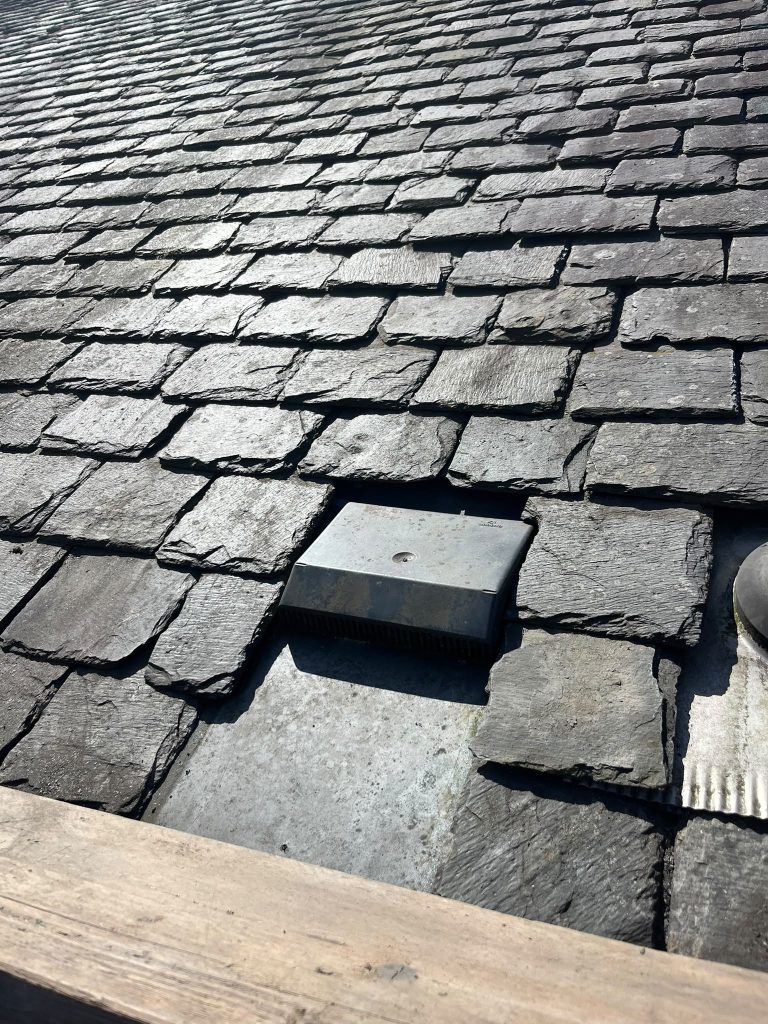
Slates or tiles off, down to the sarking. Old nails out. Waste into a skip and away — not left in your garden for a fortnight.
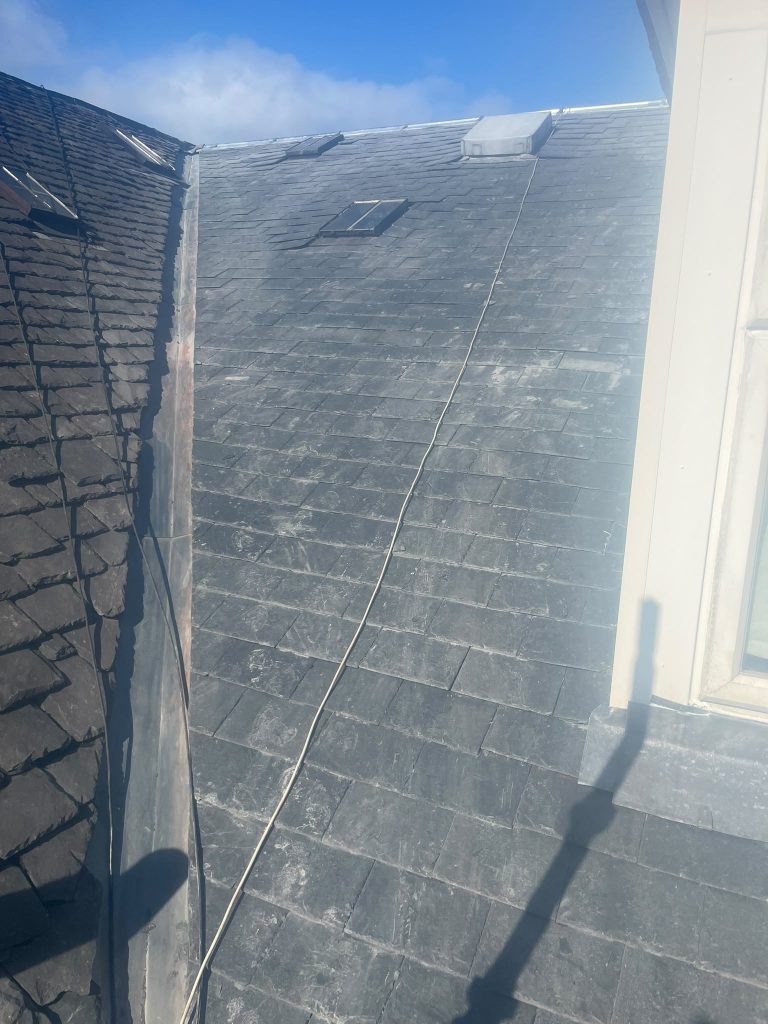
Here’s the part that catches people out. On a traditional Scottish roof, the slates sit on continuous timber sarking boards, not on battens. Once the roof is stripped, we can see the sarking properly for the first time — and on a roof that’s been leaking for years, some of it will be rotten.
A good quote tells you about this before the job starts. Ours prices the reroof on the assumption that a proportion of the sarking will need replacing, gives you a clear per- square-metre rate for any additional sarking beyond that, and shows you photographs of the rot before we replace it. What we won’t do is quote a low number, strip the roof, and then present you with a bill you can’t refuse because your house is open to the sky.
If a quote you’ve been given makes no mention of sarking at all, ask why.
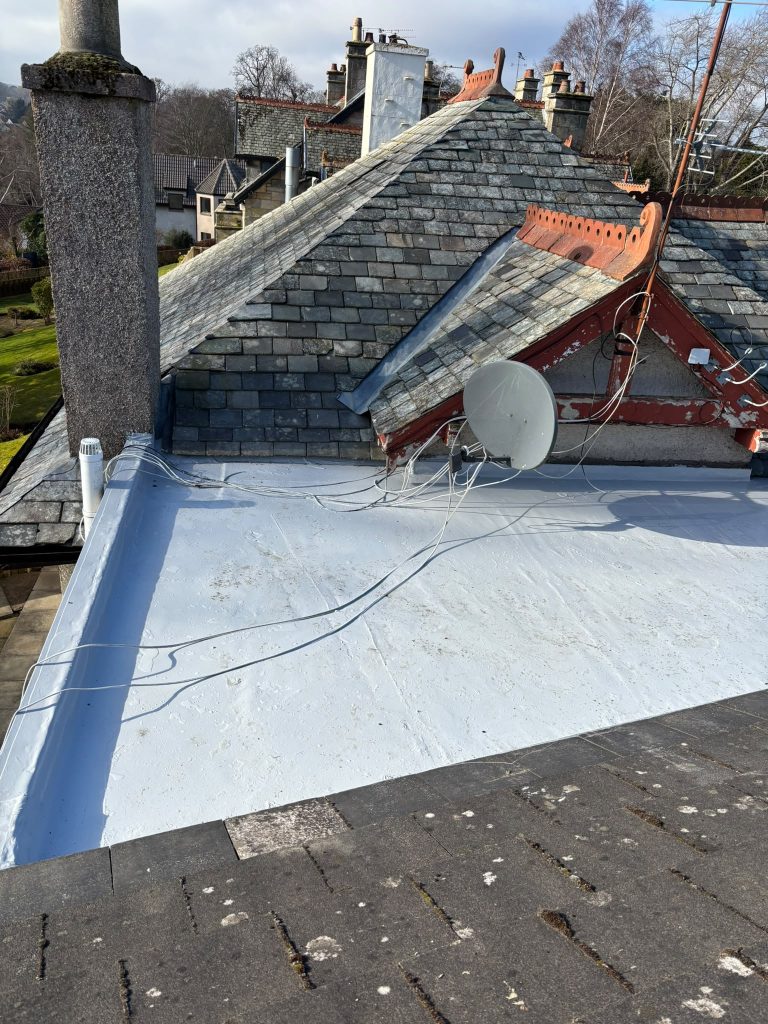
Over the membrane, so there’s a drainage and ventilation
gap and the covering isn’t sitting directly on the membrane
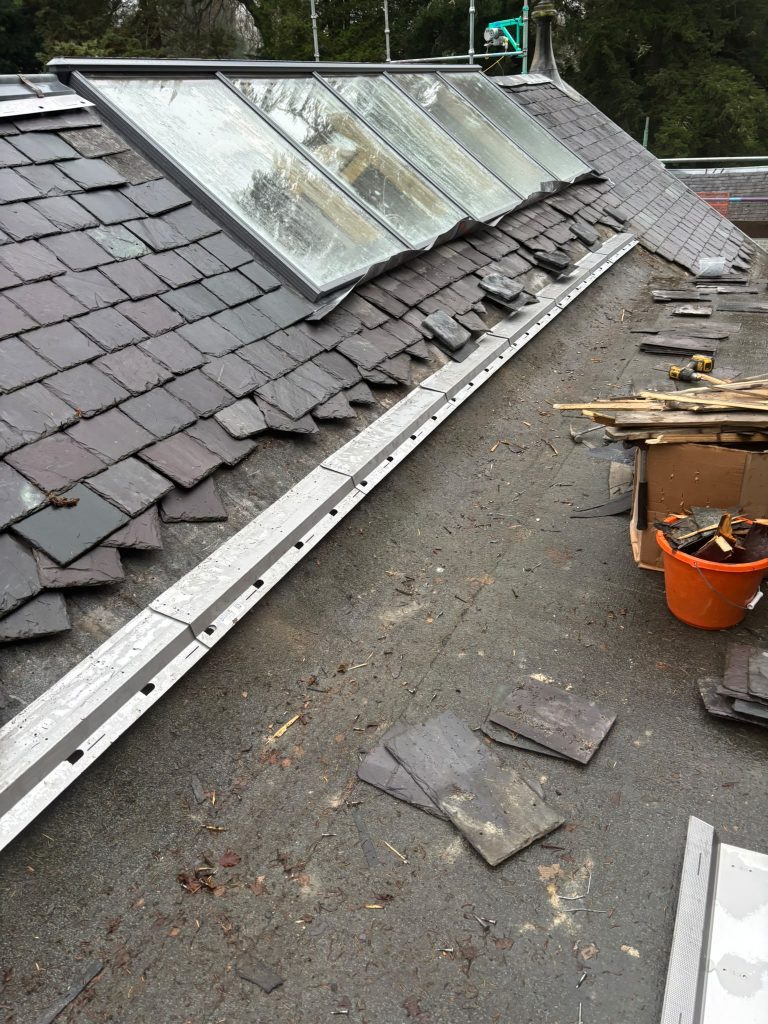
Your original Victorian roof almost certainly had nothing under the slate. Modern practice is a breathable membrane over the sarking — it sheds any wind-driven water or snow that gets past the slate, while letting moisture vapour out of the roof space. This matters enormously in Scotland, where the enemy is condensation as much as rain.
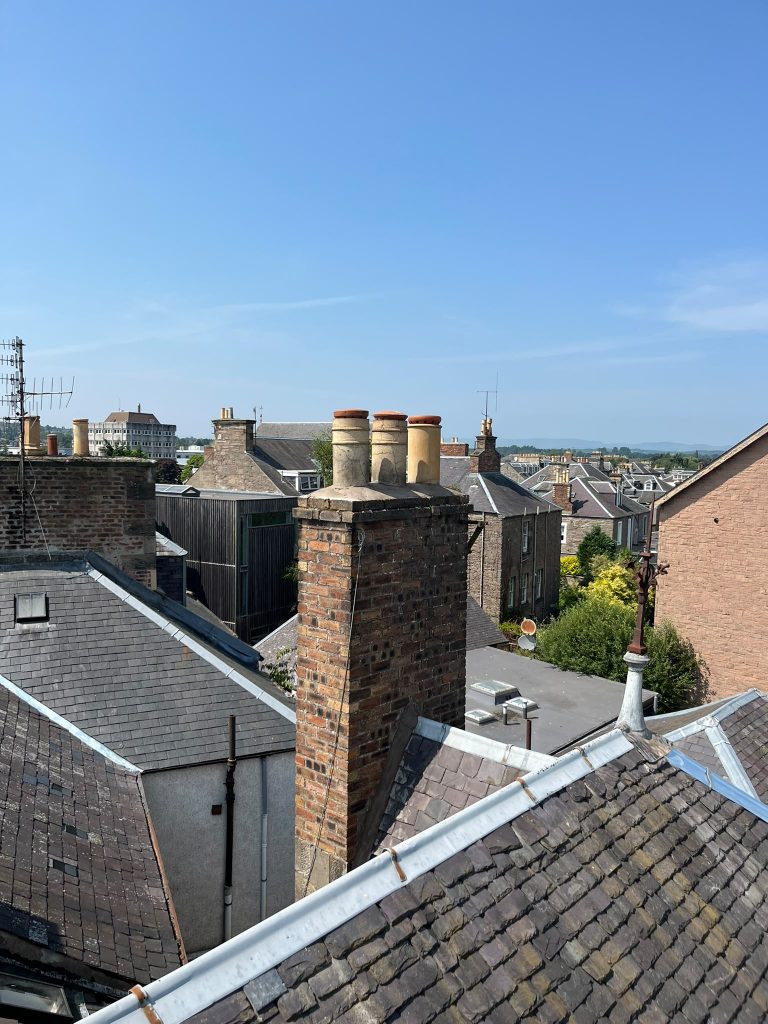
Natural slate, reclaimed slate, fibre-cement slate, concrete tile or clay tile Fixed with copper or stainless nails, not iron. This is the single most important detail in the whole job and it’s the reason the new roof will not develop nail sickness the way the old one did.
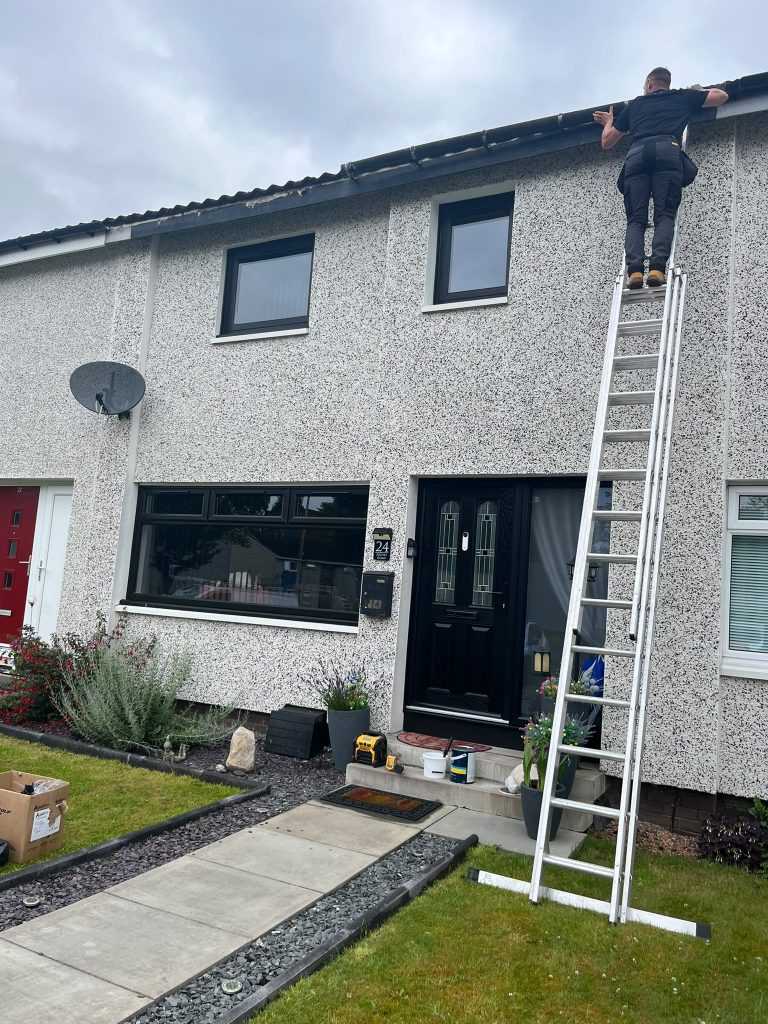
Flashings, valleys, soakers, chimney abutments — all renewed in code-
appropriate lead, properly dressed. Reusing old lead on a new roof is a false economy and we don’t do it.
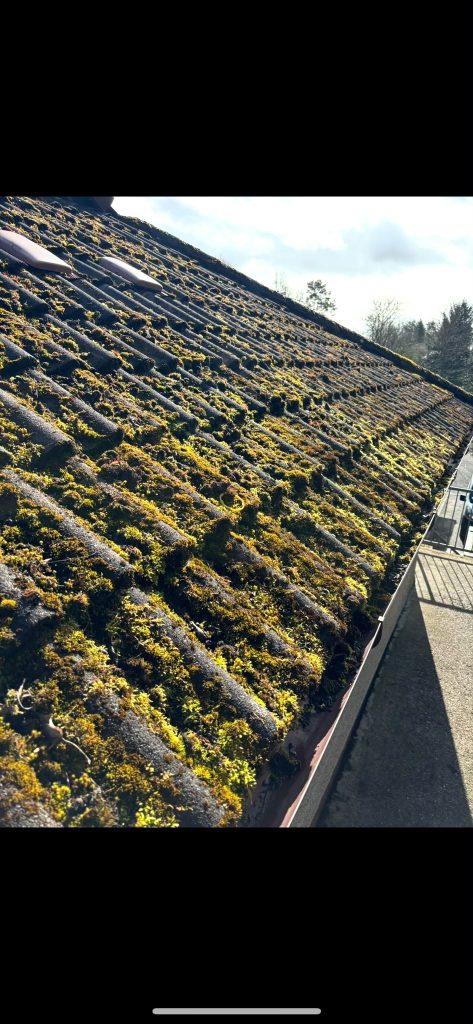
A sealed, unventilated roof space in a Scottish winter is a condensation
machine. Ridge vents, eaves ventilation or tile vents as the roof requires. This is not an
optional extra and it should be on your quote
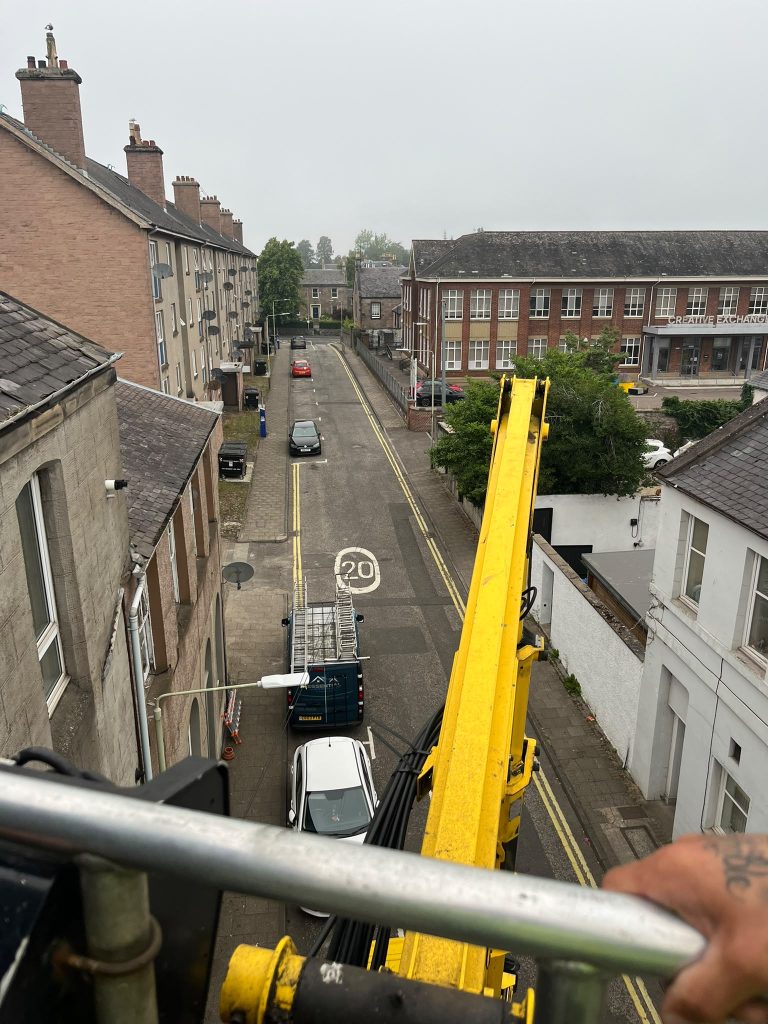
Fascias, soffits and gutters are almost always worth doing at the same time —
the scaffolding is already up, which is the expensive part. See guttering, fascias and soffits.
We tidy up once the job is finished.
In Scotland, building work is regulated by building warrants, issued by the local authority — in this case Perth & Kinross Council. This is a different system from English building regulations, and roofing advice written for England will mislead you.
As a general position: replacing a roof covering on a like-for-like basis is often exempt, but this is not universal, and it changes if the work involves structural alterations, a change of covering material (particularly to something heavier), or if the building is listed or in a conservation area.
That last point matters a great deal locally. Substantial parts of Perth city centre, and much of Dunkeld, sit within conservation areas, and there are many listed buildings across Perthshire. On those properties, the material and even the coursing of your roof may be constrained by planning as well as by building standards.
What we do: on any job where it's a live question, we tell you before we start, and we'll point you to Perth & Kinross Council's building standards team. We won't pretend to have authority we don't have, and we won't quietly do work that should have been consented.
We're based in Perth and we work across Perthshire and Kinross-shire.
Not on the list? Give us a call — if you're within reasonable reach of Perth, we'll likely come out.
See all areas we coverA straightforward semi-detached is typically one to two
weeks on site, plus scaffolding either side. Weather adds time — we’re in Perthshire and we
won’t strip a roof into a forecast that’s about to break
Yes, carefully. We work in sections and we sheet up overnight. We
won’t strip more roof than we can make watertight before we leave the site
No. We work in sections and we sheet what’s open. Your roof is never left uncovered overnight.
Yes. It’s noisy, and you’ll want to move anything precious out of the loft, but people stay in their homes for a reroof as a matter of course.
It’s worth a call to them. Most policies are unaffected but some have conditions about the property being unoccupied or undergoing structural work.
10 years on our workmanship, in writing. Materials carry their own manufacturer’s warranty on top — natural slate is frequently warranted for far longer than any of us will be around to claim on it.
Most calls answered inside 30 minutes during working hours.